Scuba Diving Jobs: A Complete Career Guide
Turning a love of the ocean into a paycheck is one of the most common questions we hear from divers. The good news: scuba diving is a real industry with a real career ladder. The less-good news: nobody hands you a map. This guide is that map — the roles, the certifications, and the path from your first Open Water course to a full-time job underwater.
The three career tracks
Almost every professional diving job falls into one of three tracks. They share a mask and fins and very little else.
- Recreational — teaching and guiding paying customers on holiday dives. Warm water, wetsuits, and people.
- Technical & scientific — deeper, longer, or research-driven dives: cave, wreck, rebreather, marine biology support.
- Commercial — industrial work underwater: welding, inspection, salvage, offshore energy. A completely separate certification world from recreational diving.
Pick the track before you pick the certification. Switching later is expensive.
Recreational: the most common path
This is the track most divers mean when they say "I want to work in diving." You'll find these jobs at dive centers, liveaboards, and resorts around the world.
The certification ladder
Recreational agencies (PADI, SSI, RAID, SDI, CMAS) all share roughly the same rungs:
- Open Water Diver — your entry ticket. Not a job.
- Advanced Open Water + Rescue Diver — required prerequisites for going pro. Rescue is where most divers grow up.
- Divemaster (DM) — your first professional rating. You can guide certified divers, assist instructors, and get paid. Check your agency's minimum logged dives before you enrol.
- Open Water Scuba Instructor (OWSI) — you can now teach and certify students. This is where a career actually begins.
- Specialty Instructor / MSDT / Staff Instructor / Course Director — the ratings that unlock better pay and more autonomy.
Timelines vary with how often you dive and with your agency's requirements.
The jobs and what they pay
Pay varies widely by country, season and employer. We do not publish pay ranges because we have no source for them.
| Role | Notes |
|---|---|
| Divemaster | Often paid per dive; food/lodging common |
| OWSI | Better in Australia, Maldives, Caribbean |
| Staff Instructor | Teaching pros as well as students |
| Course Director | Small number of jobs, high leverage |
| Liveaboard cruise director | Long rotations, huge tip potential |
What dive centers actually hire for
Most shops don't hire you because you can teach a skills circuit — they assume that. They hire you because you make their operation easier. In practice that means:
- Languages. A second or third language (German, French, Mandarin, Hebrew) makes you dramatically more employable.
- Boat and compressor experience.
- Sales instinct — upselling courses, rentals, and photos is where shops make margin.
- Reliability. Showing up on time, sober, every day, in season.
If you're just starting out, optimise for those before chasing the next certification card.
Technical and scientific diving
This is where the "real" diving lives for a lot of people: caves, wrecks, mixed gas, closed-circuit rebreathers, marine research support. The certification path branches off recreational after Advanced/Rescue via agencies like TDI, IANTD, GUE, and NAUI Tech.
Jobs cluster around:
- Tech instruction — teaching cave, trimix, or rebreather courses at specialist centers. Small market, high day rates.
- Research support — diving for universities, aquariums, and conservation NGOs. Often requires a scientific diving certification (AAUS in the US, ESD in Europe) on top of recreational ratings.
- Underwater cinematography and photography — usually self-employed, feast or famine, requires a portfolio.
Expect to fund your own gear. A technical setup costs far more than recreational kit. Build the career slowly. Almost nobody does this full-time straight out of Instructor.
Commercial diving
A different world. Commercial divers work in ports, on pipelines, on offshore oil and wind platforms, and in inland construction. It is physically brutal, well-paid, and has nothing to do with fish.
The path
- Commercial diving school, full time. Look for schools accredited by ADCI (Americas) or IMCA (rest of the world).
- Tender — your first two years. You are the deck hand who learns the trade before diving.
- Air diver → Mixed gas / Sat diver — the ladder inside the industry. Saturation divers on North Sea and Gulf of Mexico rotations are the top of the pay scale.
The money
Commercial diving generally pays more than recreational diving, and the pay reflects the risk. Ask working divers and the employers you apply to for current figures.
High pay reflects high risk. Talk to working commercial divers before spending on school — this is not a career you drift into.
Adjacent careers that keep you in the water
Not everyone wants to spend eight hours a day at 18 metres. These adjacent roles hire divers and pay competitively:
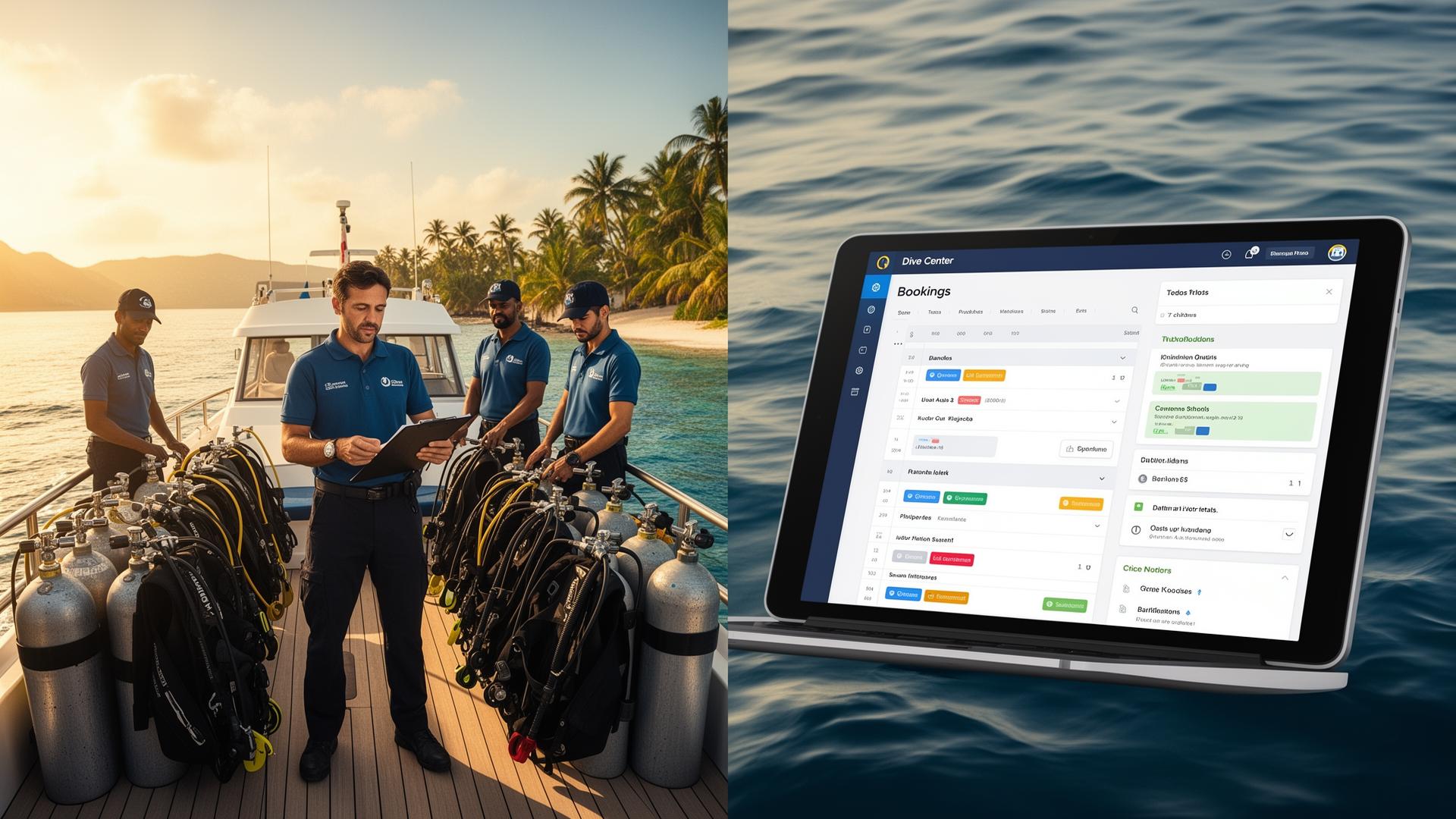
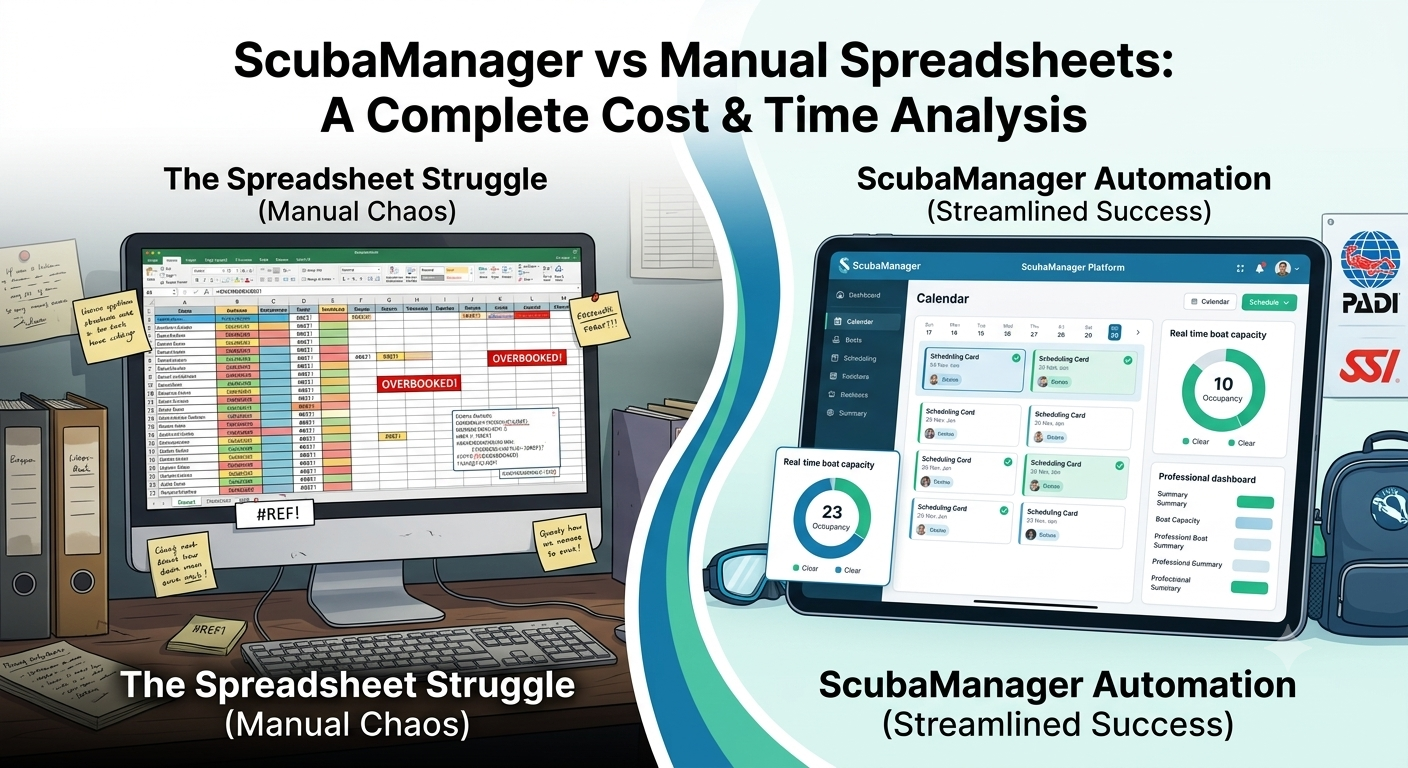
- Dive shop manager / operations lead — running the business side of a dive center. Dive shop managers also work with software such as Scuba Manager.
- Equipment technician — service and repair regulators, BCDs, and rebreathers. Manufacturer-certified techs are always in demand.
- Retail and sales — dive shops, brand reps, distributors.
- Marine conservation program leads — running volunteer or intern programs at reef and shark projects.
- Marketing and content for dive brands — if you can also write or shoot, you can build a full career here.
A sensible order of steps
If you're starting from Open Water today and want a paid diving job, here's the shortest honest path:
- First, dive constantly. Take Advanced and Rescue.
- Next, a Divemaster internship somewhere with volume (Utila, Koh Tao, Dahab, Gili Islands). Some internships pay in accommodation, not cash.
- Then, Instructor Development Course + Instructor Exam. Add two specialty instructor ratings (Nitrox is table stakes; add Deep, Wreck, or Sidemount depending on your market).
- After that, first full season as an OWSI. Learn a language in your downtime. Say yes to boat and compressor duties.
- Later, pick a specialisation (tech, tec instruction, management, cinematography) and move toward it deliberately.
Where dive careers are actually hiring
Job boards worth watching:
- Our dive job board, at scuba-manager.com/jobs.
- Regional Facebook groups ("PADI Instructors Worldwide", "Divemaster Jobs Southeast Asia").
- Agency job boards (PADI Pros, SSI MyDiveGuide).
- Liveaboard operator career pages directly.
The best jobs are still filled by word of mouth. Once you're inside the industry, keep in touch with everyone.
The honest bottom line
Scuba diving is a viable career. It is not a get-rich career for most people on the recreational side, and it is a demanding one on the commercial side. What it consistently offers is a working life built around the water, in interesting places, with people who chose to be there.
If you're thinking about the jump, the cheapest thing you can do first is book a Divemaster internship somewhere real and see if you still love diving after 60 days of doing it as a job. Most people do. Some don't. Both answers are useful.